

The Garage · Common faults, step by step

Troubleshooting

Most ride-on faults come down to the battery, a connection or a safety switch. Work through the simple checks first. Always disconnect the battery before opening the car.
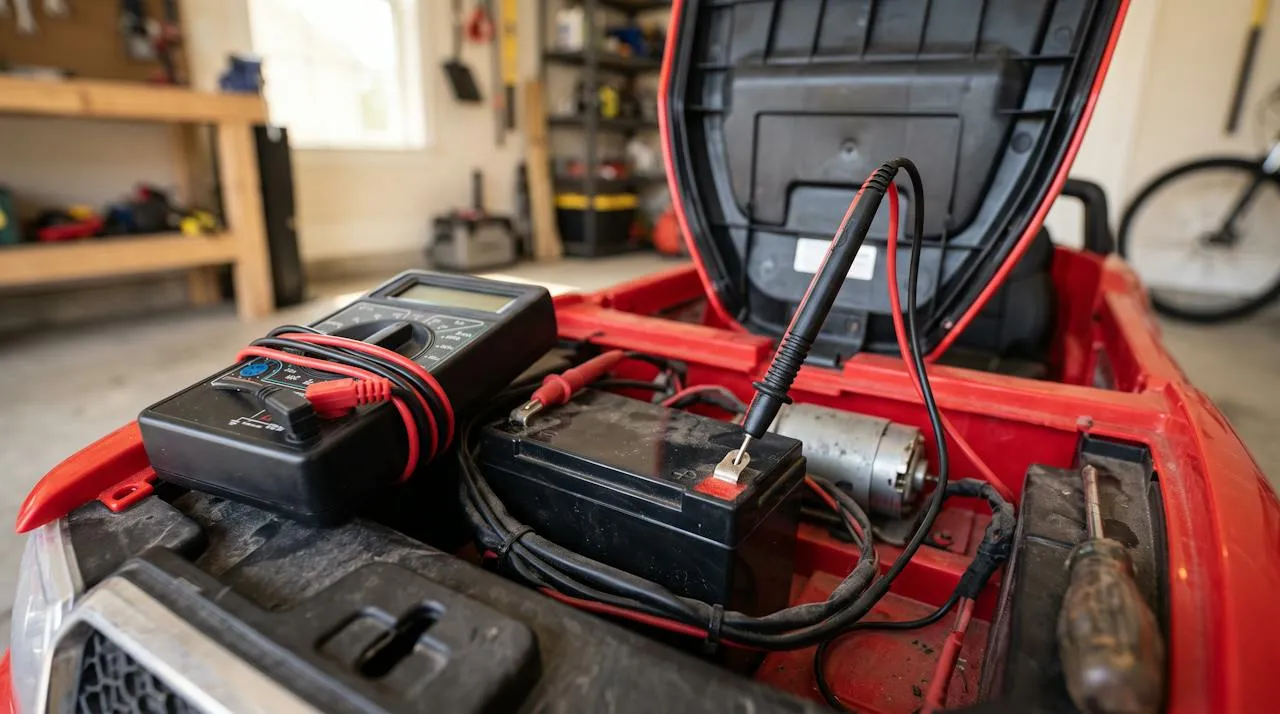
A multimeter testing the battery terminals inside a ride-on with the seat lifted
Illustration
It will not move at all
  • Check the battery is charged and connected, and that any in-line fuse is intact.
  • Check the power switch, and whether the remote is set to parent control mode.
  • Check the pedal and gear selector plugs have not come loose.
  • If the car was just charged overnight and still will not move, the battery may be worn.
It runs for a few minutes and stops

Often a tired battery or a fuse or overload protection tripping. Let it rest, check the rider is within the maximum load, and avoid long grass or slopes the model is not designed for.

It only goes slowly

Check the speed selector and the remote speed setting. A low battery will also reduce speed. On grass or slopes, lower speeds may be all the motors can manage.

The remote will not connect

Replace the remote batteries, then follow the pairing steps in the manual, usually with the car switched on and a pairing button held on the remote.

It will not charge

Check the charger light, the wall socket and the plug in the charging port. Confirm you are using the original or an exact specification charger. A battery left flat for a long time may no longer accept charge.

Clicking or grinding noise

Stop driving and check for a stripped gearbox or a loose wheel. Continuing can damage the motor. Gearboxes are model specific replacement parts.

Disconnect the battery before opening the car. If a battery is swollen, cracked or leaking, stop using it.