

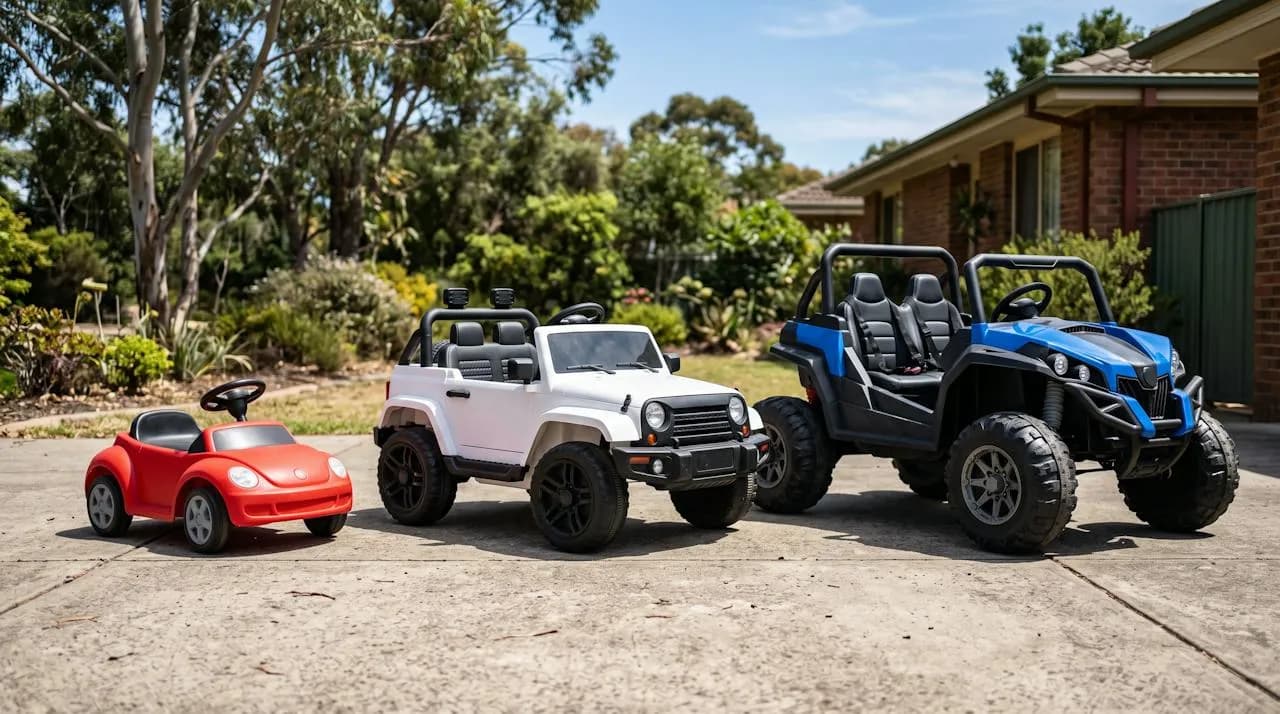
Short guide. For the full comparison: Every 12V and 24V listing compared side by side · Listed motor watts, model by model · 6V ride-ons
The short answer
- 6V: slow, light starter ride-ons for toddlers on smooth, flat ground.
- 12V: the most common system. Suits most preschoolers and early primary kids on flat ground and short lawn, especially with two motors.
- 24V: more power for older kids, two riders and rougher surfaces. Usually heavier, bigger and more expensive.
What voltage changes
Voltage is the battery system that feeds the motors. For the same motors, a higher voltage generally means more power available, which shows up as more speed, better hill and grass performance, or the ability to carry more weight.
But voltage is not a speed rating. A 12V car with two motors and rubber tyres can feel stronger on lawn than a 24V model with small motors and hard plastic wheels. Always read voltage together with the number of motors, motor wattage (when published), the wheels and the maximum load.
Voltage and battery capacity are different things
Amp hours (Ah) describe how much energy the battery stores. A 12V 7Ah battery and a 12V 10Ah battery run the same system, but the 10Ah pack should last longer between charges. Many listings skip the Ah figure. When it is missing, treat any runtime claim with caution.
Runtime claims are manufacturer or retailer figures. Real runtime depends on the child's weight, the surface, the temperature, hills and how often the car stops and starts. Tiny Whips will publish measured runtimes only when we have tested a vehicle ourselves.
Which one for which child?
- Under 3 or first ride-on: 6V or a 12V model with a parent remote and a low speed setting.
- 3 to 6 on driveways and flat lawn: 12V, ideally two motors, with a parent remote for the younger end.
- Bigger kids, two riders, or grass and gravel: 24V with four motors or stated 4WD, EVA or rubber tyres and a higher listed maximum load.
Do not mix batteries or chargers
Never fit a higher-voltage battery to a ride-on designed for a lower voltage, and only use a charger that matches the battery's voltage, chemistry and connector. Upgrading a 12V car to 24V can overheat motors, wiring and switches. If you need a replacement, match the original specification and connector (see The Garage).