

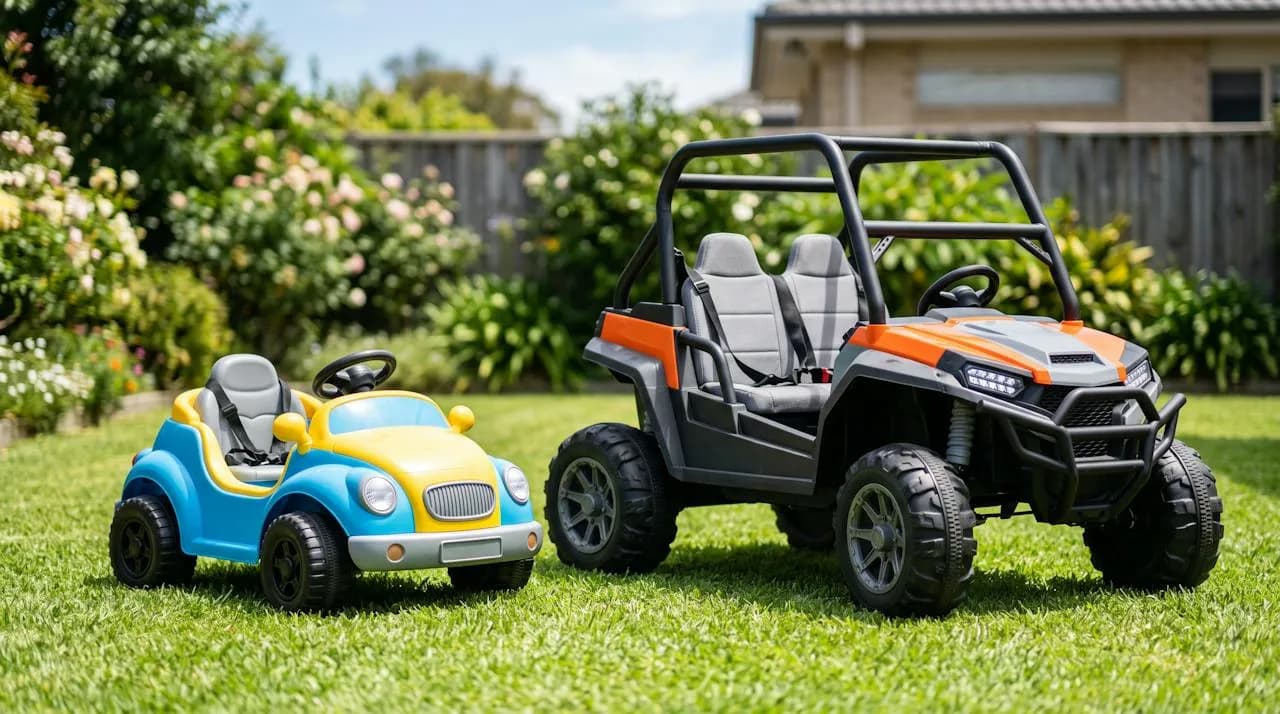
Short guide. For the full comparison: Every two-seat ride-on compared
When two seats make sense
- Two children close in age who will ride together.
- A younger child riding with an older sibling.
- Grandparents' houses and shared family use.
What changes with two seats
The listed maximum load is for everyone in the car combined. Two riders at 20 kg each need a car rated for at least 40 kg. Two-seaters are also larger and heavier, so check storage space and whether you can lift it.
With two riders on grass or a slope, extra power helps. Many two-seaters are 24V with four motors for that reason, but check each listing.
When one seat is better
For a single young driver, a one-seater is usually lighter, cheaper, easier to store and easier for the child to control.