

Short guide. For the full comparison: Answer five questions in the Finder
1. Start with size and weight, not just age
Age guidance is a useful starting point, but children of the same age vary a lot. Check the listed maximum load against your child's weight today and in a year or two. If two children will ride, add their weights together.
Also check seat room. A tall four year old can outgrow a small 6V car's legroom well before the listed age limit.
2. Be honest about the surface
Most ride-ons are designed for smooth, hard, flat ground. Grass, gravel and slopes need more power and grip. If your child will mostly drive on lawn, look for at least two motors, and for longer grass or gravel look at 24V models with four motors or 4WD and EVA or rubber tyres.
3. Decide how much control you need
A parental remote lets you steer and stop the car. For children under about four, or anywhere near a driveway, a remote with an emergency stop is worth prioritising. Check whether the listing confirms the remote is included.
4. Check the battery details
- Voltage (6V, 12V, 24V) and capacity (Ah) if listed.
- Battery type (sealed lead acid or lithium) if listed.
- Whether a replacement battery and charger are sold, and what connector they use.
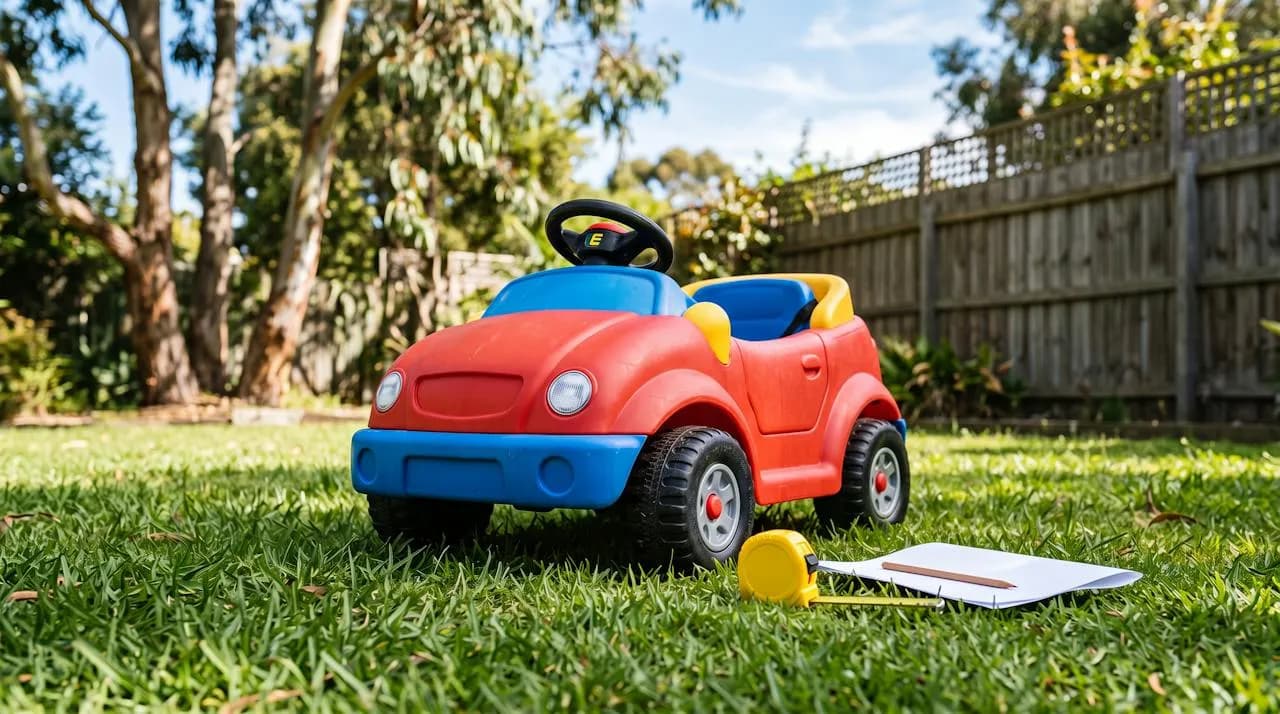
5. Measure your storage and your car boot
Larger 24V two-seaters can be 30 kg or more and well over a metre long. Measure where it will live and, if you plan to take it on trips, your boot opening.
6. Look at ownership, not just purchase
Batteries wear out and remotes get lost. A model with spare batteries, chargers, remotes and wheels available in Australia will be cheaper to keep running. Check the warranty period and who handles claims.
7. Compare prices with dates
Ride-on prices move often. Every price on Tiny Whips shows the retailer and the date we checked it. Always confirm the current price and stock on the retailer's page before buying.