

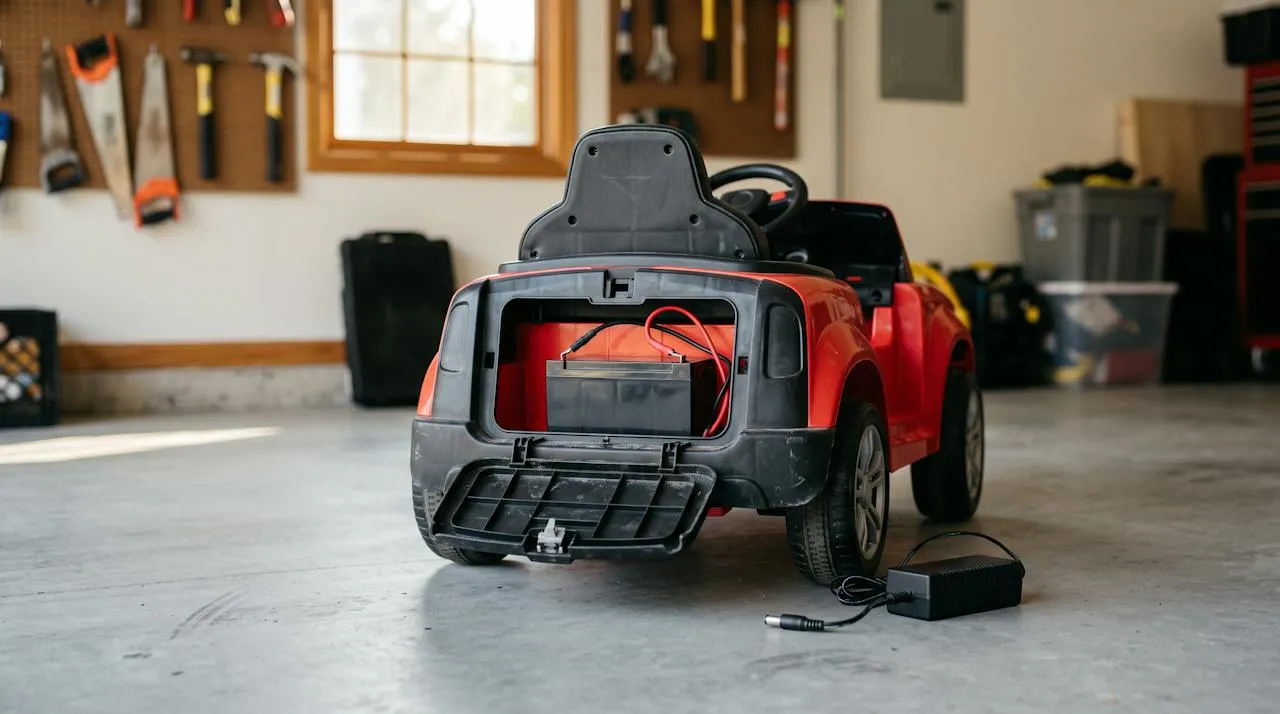
Short guide. For the full comparison: Every claimed runtime and charge time · Replacement battery fits
Runtime per charge
Listings usually quote a runtime in minutes. These are claims, measured in ideal conditions. Heavier riders, grass, hills, cold weather and lots of stop and start all shorten real runtime. Tiny Whips will only publish measured runtimes from our own tests.
Battery lifespan
Most ride-ons use sealed lead acid (SLA) batteries, and some newer or premium models use lithium. SLA batteries are sensitive to being left flat: a battery stored discharged for weeks can lose capacity permanently.
Care habits that help
- Follow the manual for the first charge and for charging times.
- Recharge after each use rather than leaving the battery flat.
- Do not leave it on a basic charger for days unless the manual says the charger is designed for that.
- Over winter, charge fully before storing and top up every few weeks.
- Store the car somewhere dry and out of direct heat.
- Only use the charger supplied or an exact specification replacement.
Signs the battery is worn
- Runtime has dropped sharply.
- The car slows on slopes it used to climb.
- The battery will not hold charge overnight.
- The case is swollen, cracked or leaking: stop using it and dispose of it properly.